





Growing together: Integrating farmers into value chains with sustainable finance

Growing together: Integrating farmers into value chains with sustainable finance

On April 10, 2026, a field visit was conducted in the villages of Aral, Ak-Bashat, Bekitai, and Bokso Zhol in Zhayyl district of Chui region within the framework of the “Value Chain Agro Finance” project.

The purpose of the visit was to monitor sugar beet emergence, discuss the results of spring field operations, and promote methods for managing soil crusting. The visit was coordinated by project expert Elvira Suvanova with the participation of agronomist Taalay Baitulenov.

During the monitoring, 8 farms were assessed. In general, sowing and fertilizer application have been completed, and chemical weeding has begun on some fields. Crop conditions are generally stable, although certain plots show moisture deficiency and active weed growth, requiring immediate intervention.

Particular attention was given to key technological insights. Farmers, taking into account the negative experience of 2025, introduced an innovative method to break soil crust by wrapping chains around tractor tires. This approach proved effective in breaking the crust formed after rainfall and helped preserve crop emergence.


Digital support also played an important role. Based on last year’s challenges, the TES Center developed technical guidelines and a series of video tutorials on spring field operations. These materials were rapidly shared via WhatsApp groups, enabling farmers to respond to risks in a timely manner.

Spring rains contributed to good soil moisture overall, but in some fields moisture deficiency and weed pressure remain an issue.

The 2026 season is accompanied by several challenges. Rising prices for mineral fertilizers and limited availability of certain inputs continue to create economic barriers. In addition, strict monitoring of timely chemical weeding is essential.

As a result of the visit, it was recommended to strengthen field-level monitoring of soil moisture, especially in remote areas. It was also proposed to document and scale up the farmer-developed method of soil crust management for wider dissemination.

On April 9, 2026, a field visit was conducted in the Chui region within the framework of the “Value Chain Agro Finance” project, aimed at monitoring farms engaged in sweet pepper production.

The purpose of the visit was to assess farmer fields, monitor greenhouses used for seedling production, evaluate the condition of planting materials, and provide advisory support to farmers. During the visit, 6 farms were inspected, where transplanting of seedlings into greenhouses had already been completed.

The analysis showed that the main cultivated varieties include “Slonovoe Ukho”, “Slonovaya Noga”, and the locally reproduced variety “Lastochka”. At the same time, a shortage of the highly demanded variety “Polet” was observed. Despite strong demand and good performance last year, it was not supplied to the Kyrgyz market due to external factors. From an economic perspective, the “Ferrari” hybrid remains expensive, while “Slonovoe Ukho” and “Lastochka” are more affordable options for farmers.

In terms of agronomic practices, farmers are adapting to current market conditions. Due to the lack of ammophos, they have shifted to using diammonium phosphate and ammonium nitrate. A shortage of urea was also noted, and consultants recommend substituting it with nitrate while adjusting application rates according to crop needs.

Among the visited farms, there are both experienced farmers and new participants with no prior experience in pepper cultivation. Some farms have submitted requests for fertilizers, while others rely on their own resources. Only two out of six farms use drip irrigation, highlighting the need to further promote this technology.

Several risks were identified during the visit. Changes in credit conditions, specifically the shift from full post-payment to a 50 to 50 model, create challenges for some farmers. There is also a significant increase in fertilizer prices and an expected rise in irrigation water tariffs. In addition, logistical disruptions continue to affect the availability of high-quality seeds.

Based on the findings, several recommendations were made. It is necessary to strengthen informational and advisory support, especially for new participants. Continued promotion of drip irrigation as an efficient water management practice is important. It is also recommended to develop clear guidelines on the use of alternative fertilizers under current shortages in order to prevent potential yield losses.


On April 6, 2026, a field visit and meetings with farmers cultivating early onions were conducted within the framework of the “Value Chain Agro Finance” project.

The main objective of the visit was to assess the current situation in onion cultivation, evaluate field conditions and farmers’ perspectives, and compare the effectiveness of traditional furrow irrigation and drip irrigation systems.

During the meetings, it was noted that traditional irrigation remains widely used but is associated with high labor input and significant water losses. Irrigating one plot can take from 24 to 48 hours due to water seepage and the lack of canal lining. Water losses within on-farm canals can reach up to 45 percent. This also creates conflicts among farmers due to water shortages, requiring them to constantly monitor water distribution in the fields. The average cost of one irrigation is about 500 KGS per hectare, with a flow rate of 50-60 liters per second and 15-20 irrigation cycles per season.


At the same time, some farmers have shifted to drip irrigation using wells and water storage basins. This system virtually eliminates water losses and significantly improves efficiency. However, operational costs are twice as high, and initial investments range from 70,000 to 80,000 USD per hectare.

A comparison of yields in 2025 demonstrated a clear advantage of modern technologies. Under traditional irrigation, yields reached about 26 tons per hectare, while drip irrigation achieved up to 60 tons per hectare.

Key risks for 2026 include rising prices for mineral fertilizers and expected increases in irrigation water tariffs. At the same time, there are positive developments. This year, water supply started earlier, allowing farmers to carry out the first irrigation on time. Favorable spring rainfall has also had a positive impact on crop conditions. Farmers expect high yields by the end of the season.


On April 5, 2026, within the framework of the project “Value Chain Agro Finance”, a field visit was conducted in Jalal-Abad region to monitor grain crop fields. The main objective of the visit was to observe farms applying No-till method, assess crop conditions, and provide advisory support.

During the mission, five farmers’ fields with a total area of more than 13.5 hectares were inspected. These farms are applying No-till (soil zero-tillage method) for the first time. All farmers used the wheat variety “Stiklovidnaya 24” (first reproduction). The seeding rate was approximately 230 kg/ha, with fertilizers including ammophos and ammonium nitrate applied.

Field observations showed positive results. Although farmers initially expressed concerns due to low precipitation in the autumn period, spring rains ensured good germination. At the time of inspection, the wheat crops were in good condition.

Special attention was given to the introduction of No-till method in Kashka-Terek village, where this technology is being applied for the first time. Previously, farmers were only familiar with the method in theory, but through project support and training activities they have transitioned to practical implementation.


Key challenges were also identified during the meetings. Rising prices of mineral fertilizers and a shortage of urea on the market were among the main constraints. In response, experts recommended the use of ammonium nitrate as an alternative nitrogen source, which was promptly adopted by most farmers.

The economic efficiency of the technology was also discussed. This season, the rental cost of a No-till seeder method was approximately 6,000 KGS per hectare. This has increased farmers’ interest in purchasing their own machinery. Currently, the technology covers around 35 hectares in the region, with a potential expansion up to 300 hectares.

The field visit confirmed strong interest among farmers in resource-efficient technologies and significant potential for scaling up No-till method practices in the region.


From March 24 to 31, 2026, a series of meetings on sustainable agriculture development and carbon sequestration were held in Osh, Bishkek, and Manas town in Jalal-Abad region.

The events were organized within the framework of the “Value Chain Agro Finance” project and brought together representatives of government institutions, local authorities, farmers, partner organizations, and experts from the agricultural sector.

During the meetings, participants discussed resource-efficient and regenerative agricultural practices, as well as their role in enhancing the sustainability of agricultural production. Particular attention was given to no-till farming technology as a key approach for preserving soil moisture, increasing productivity, and restoring soil fertility.


In addition, participants explored opportunities for carbon sequestration in agriculture and the potential for carbon credit certification. These mechanisms could provide farmers in Kyrgyzstan with access to climate finance and create additional income streams in the future.

The meetings served as an important platform for knowledge exchange and coordination among stakeholders, contributing to the development of a shared vision for sustainable growth in the country’s agricultural sector.


As a part of the implementation measures to provide technical support and increase the capacity of State laboratories, in March 2026 the Value Chain Agro Finance Project organized a study tour to Germany for laboratories personnel. During the study tour the participants visited key technical centers in the laboratory industry and biotechnology in Germany and the European Union.

The key event was participation in the international Analytica 2026 exhibition in Munich. As the world’s leading platform for laboratory technology, the exhibition showcased to the participants the main automation trends and the latest technological advancements. The study tour program also included a visit to Shimadzu Europa Gmbh, the global leader in manufacturing of laboratory analytical equipment.


The study tour allowed the laboratory personnel to deepen their knowledge and contributes to the achievement of goals in strengthening  the technical capacity of laboratories in modernizing the quality control and research system for food products and implementation of innovative research methods.

The participants had a unique opportunity to get acknowledged with the innovative tech developments, take part in practical demonstrations, establish professional network with equipment suppliers and enrich their knowledge related to current European methods on modern approaches to ensuring food safety.


On March 6 and 10, 2026, field based training sessions were conducted for farmers in Sokuluk and Moscow districts within the framework of the Value Chain Agro Finance project focusing on grain production.

The trainings were organized with the participation of the public association AgroLid and aimed at improving farmers’ knowledge of modern agricultural technologies, efficient use of fertilizers, and crop protection practices.

In Sokuluk district, the trainings covered the villages of Zhany Zher, Zhany Pakhta, Uchhoz, Stepnoy and Kamyshanovka, with 28 participants attending. In Moscow district, the sessions were held in Belovodskoe, Spartak and Alga, with 17 farmers taking part.

Expert Estebes Beishev provided detailed guidance on spring fertilization of winter wheat, including timing and methods of nitrogen application, types of fertilizers, and recommended application rates depending on soil nutrient content.

Special attention was given to weed control under NO TILL technology. Participants learned how to assess weed infestation, select appropriate herbicides, and apply them effectively in terms of timing and dosage.

During the trainings, farmers received practical recommendations on calculating fertilizer application rates based on soil conditions, climate factors, and crop requirements. Key wheat diseases, pests, and weeds affecting productivity were also discussed along with effective control measures.

Participants were additionally introduced to the advantages of NO TILL technology, including moisture conservation, reduced soil erosion, and improved soil structure. It was emphasized that adopting this approach can help reduce production costs and increase the sustainability of agricultural practices.

The trainings were conducted in an interactive format, allowing farmers to ask questions, share experiences, and receive practical advice from experts. This approach supports the adoption of modern farming methods and contributes to increased grain productivity.


On February 27, 2026, a training seminar on sugar beet cultivation was held for farmers at the Jayyl District State Administration building. The event was organized within the framework of the Value Chain Agro Finance project for the sugar beet value chain, with participation from representatives of “Shchelkovo Agrohim”, “Avgust”, and the “Kaindy Kant” sugar factory.

A total of 42 farmers attended the seminar. Its main goal was to enhance farmers’ professional knowledge in sugar beet cultivation and to facilitate the exchange of practical experience.

The seminar opened with a welcome speech by Kanatbek Kalmatov, Acting Head of the Jayyl District Department for Agricultural Development. He highlighted the department’s important role in supporting farmers, introducing modern agrotechnologies, and implementing state programs.


The main part of the seminar was conducted by expert Mirgasym Allakhveranov. He provided participants with detailed information on agrotechnical methods for successful sugar beet cultivation, including land preparation, sowing, plant care, weed, disease, and pest management, fertilizer use, irrigation, and proper water management.

Special attention was given to the issue of soil compaction, which last year caused re-sowing in some fields. Participants discussed different ways to address this problem. Farmers shared their experiences, while representatives from “Avgust” and “Shchelkovo Agrohim” offered recommendations to reduce the negative effects of soil compaction.

The seminar also covered factors affecting sugar content in sugar beets. Experts emphasized that balanced nutrition and timely agrotechnical practices are key conditions for achieving high-quality yields.

In addition, expert Talay Baytulenov informed farmers about financial opportunities under the Value Chain Agro Finance project.

Representatives from “Shchelkovo Agrohim” and “Avgust” introduced plant protection products and provided current pricing information. A representative of the “Kaindy Kant” factory shared details on sugar beet seed prices and procurement conditions for 2026.

The seminar was held in an interactive format. Farmers actively asked questions and received practical advice from experts.


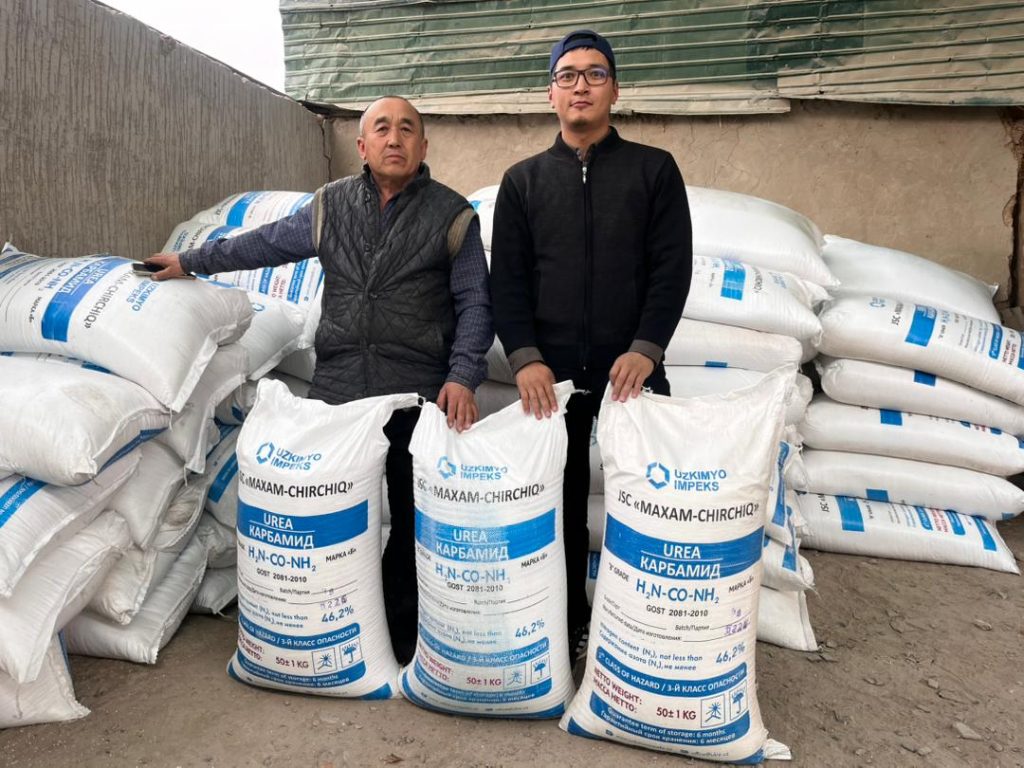
A total of 35 tons of urea (nitrogen fertilizer) have been delivered to the Nookat district of Osh region. This marks the final batch of nitrogen fertilizers provided to Resource-Saving Agriculture Teams promoting zero-tillage technology.

In total, 300 tons of nitrogen fertilizers (ammonium nitrate and urea) have been supplied to southern Kyrgyzstan. The delivery is coordinated with the support of the Value Chain Agro Finance project, which aims to strengthen sustainable agro-financing mechanisms and improve farmers’ access to essential agricultural inputs.

The project also supports farmer training, agronomic advisory services, service teams, and the development of tailored financial products for agriculture. This approach ensures farmers have access to production inputs while building a sustainable financing system that promotes the adoption of resource-saving technologies and the development of agricultural value chains.


The Value Chain Agro Finance project continues conducting practical trainings in 2026 at the Center for Veterinary Diagnostics and Expertise and the Department of Disease Prevention and State Sanitary and Epidemiological Supervision.

From February 9 to 20, 2026, another series of practical sessions was held aimed at expanding the accreditation scope of these laboratories. These activities are intended to improve the quality and safety of food products.


During the practical trainings, laboratory specialists gained new knowledge on detecting antibiotic residues in food products and raw materials.

The Value Chain Agro Finance project hopes that the results of this meticulous work will be available to stakeholders in the third and fourth quarters of 2026.