




Growing together: Integrating farmers into value chains with sustainable finance

Growing together: Integrating farmers into value chains with sustainable finance

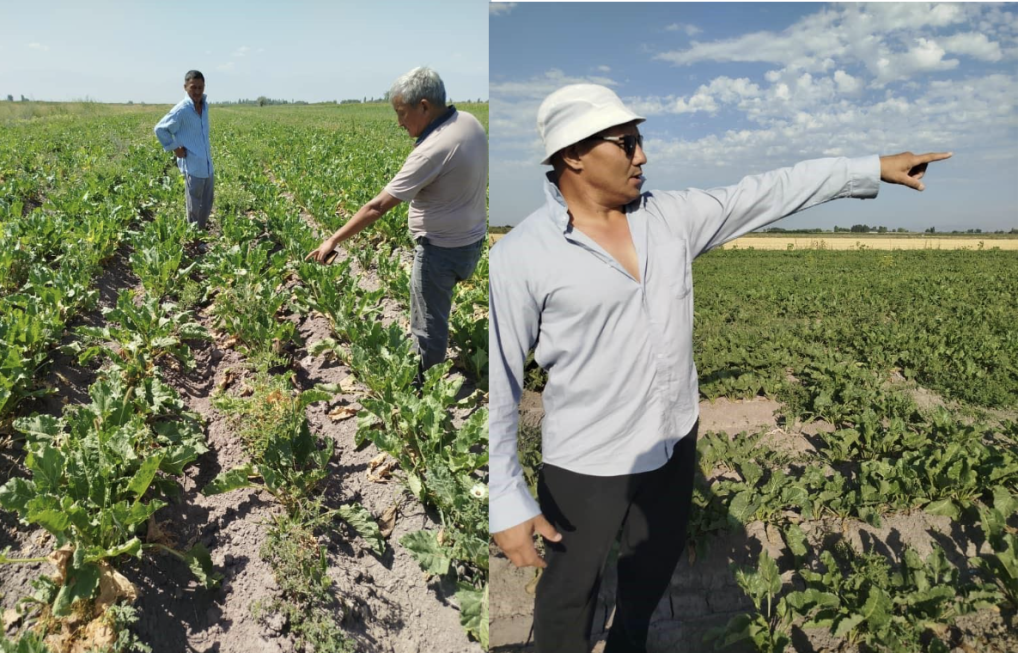
On August 15, 2025, the Value Chain Agro Finance project expert, Elvira Suvanova, together with specialists from the TES Center, carried out a field monitoring visit to sugar beet fields in Zhaiyl district of Chuy region, covering the villages of Ak-Bashat and Zheken.

During the visit, five fields were inspected and eight farmers were interviewed. Farmers reported that due to heavy rains in spring and the resulting soil crust, more than 80% of them were forced to re-sow sugar beet, in some cases two or even three times. Only two farmers managed to avoid re-sowing: one by planting early, and another by applying spray irrigation to break the soil crust, a method that has since attracted interest from others.

The monitoring revealed that while fields with dense germination showed minimal weed presence, sparse crops suffered from active weed growth, which poses risks to yields. No major outbreaks of pests or diseases were detected, though a localized spider mite infestation was successfully treated in time.

Many farmers expressed concerns that this year’s harvest may not cover production costs. Some switched to alternative crops such as corn and watermelons. For example, farmer El’diyar Kerimkulov, after an unsuccessful re-sowing on part of his land, planted watermelons on 2 hectares and earned around $20,000.

Based on the findings, experts recommended developing clear guidelines for re-sowing and alternative crops, improving early warning systems for farmers during abnormal weather conditions, supporting dialogue with the Kainda-Kant sugar factory regarding deferred seed payments, and strengthening pest monitoring. The project also plans to include new elements of climate stress management in its farmer training programs.
On August 1, 2025, a field day on “Demonstration of Hybrid and Sweet Pepper Varieties Cultivation Technology” was held at the demonstration plot of farmer Ravshan Jooshev in Nizhnee Chuyskoye village, Sokuluk district, Chuy region. The event, organized under the Sweet Pepper CDS, brought together 50 participants, including farmers, specialists from the District Department of Agricultural Development (DUAD), experts from the bioplant at the Department of Chemization, Quarantine and Plant Protection of the Ministry of Agriculture of the Kyrgyz Republic, and representatives of seed and agricultural input companies such as AgroVito and Agrimatka.

The event was opened by Maksat Kozhomkulov, Director of the TES-Center’s Bishkek branch, who emphasized the importance of knowledge exchange and introducing innovative solutions in vegetable farming. Akat Bayaliev, representative of the Sokuluk DUAD, spoke about ongoing and upcoming projects in the district: construction of a 4-hectare agrologistics center with cold storage for farmers’ produce, support for cooperatives through 5-year land lease opportunities, and development of an irrigation system covering 200 hectares with drip irrigation and partial cost compensation. Elvira Subanova, representing the AFC project, highlighted the project’s contribution to supporting sweet pepper farmers and developing the local agricultural sector.


Agronomist Abdilkhamid Mamashukurov from the TES-Center presented innovations in sweet pepper cultivation, including switching from broadcast seeding to row planting, the importance of seedling pricking, application of phosphate fertilizers and ammonium sulfate, timing of transplanting, and pest management methods.

Participants observed pepper samples grown on the demonstration plots, weighing fruits and assessing their characteristics. The PALET+ hybrid received the highest rating, with an average fruit weight of 493 g, thick walls for better transport, and affordable seed cost. Other hybrid results were: Attilius — 449 g, Numbernoy — 439 g, Bugatti — 344 g, Magretta — 463 g.

In the economic session, Maksat Kozhomkulov presented comparative data on the profitability of different sweet pepper hybrids, allowing farmers to review production costs, profitability, and investment requirements. Experts from the Department of Organic Agriculture demonstrated beneficial entomophages and biofungicides, explaining production methods and application rates. Company representatives presented seeds and fertilizers, explaining product effectiveness against pests and diseases.

During the field day, key aspects of sweet pepper cultivation were discussed, including hybrid selection, planting schemes, irrigation methods, and plant protection systems. Special attention was given to integrated pest management combining biological and chemical approaches to minimize losses from pests and diseases.

The field day provided a practical platform for knowledge exchange, helping farmers improve their cultivation practices and contributing to the development of competitive vegetable farming in Chuy region.


From June 30 to July 4, 2025, the Laboratory of Chemical and Analytical Research of the Center for Laboratory Testing of the Department of Disease Prevention and State Sanitary and Epidemiological Supervision successfully underwent a re-accreditation procedure with an expanded scope of accreditation in accordance with the requirements of the international standard ISO 17025.

The Value Chain Agro Finance project is pleased to note that, as part of this procedure, the laboratory’s methods for food product testing were evaluated, aimed at improving the quality and safety of food products in the Kyrgyz Republic.


Key methods supported and introduced with the assistance of the project include:

  • Determination of sorbic and benzoic acids in food products;
  • Determination of sucrose, glucose, and fructose in honey;
  • Determination of lead, molybdenum, antimony, calcium, sodium, magnesium, aluminum, copper, mercury, barium, arsenic, cadmium, selenium, silver, zinc, iron, cobalt, lithium, manganese, nickel, strontium, boron, and uranium in water;
  • Determination of pesticides (simazine, atrazine, and 2,4-dichlorophenoxyacetic acid) in water;
  • Determination of synthetic dyes in soft drinks;
  • Determination of mycotoxins in food products using HPLC-MS/MS.

The Value Chain Agro Finance project expresses its sincere gratitude to all employees of the Laboratory of Chemical and Analytical Research of the Center for Laboratory Testing for their high professionalism and significant contribution to the development and improvement of the laboratory’s capabilities.


From July 21 to 24, 2025, specialists from the TES Center conducted monitoring of sugar beet fields in several villages to identify pests and diseases and provide recommendations to farmers.

Special attention was given to powdery mildew and spider mite, whose activity increased this year due to dry and hot weather conditions. Such climate creates optimal conditions for their rapid reproduction and spread. Spider mites typically appear in the second half of summer, and current observations confirm an increase in their activity.

Monitoring covered fields of 40 farmers in the villages of Zheken, Jon-Aryk, Sary-Bulak, Bekitay, Bokshe-Zhol, Sosnovka, Ak-Bashat, and Maltabar. No signs of pests or diseases were found on the fields of farmers Japarov and Omuraliev, but crops suffered from moisture deficiency. Farmers were advised to irrigate timely considering limited water availability.


In Ak-Bashat and Sosnovka, infection hotspots were detected: mass infestation of spider mites in Ak-Bashat and signs of powdery mildew in Sosnovka. Farmers were urgently recommended to treat crops with acaricides and fungicides to protect the fields.

It is worth noting that many farmers were busy harvesting and performing vegetative irrigation during the monitoring period, which limited their participation. However, TES Center specialists conducted inspections independently and provided recommendations via phone and messengers.

Additionally, acute water shortage was observed, increasing plant stress and the risk of pest and disease spread.

In summary, the conducted monitoring enabled timely identification of problematic areas, provision of advisory support to farmers, and implementation of protective measures to preserve the sugar beet harvest this season.


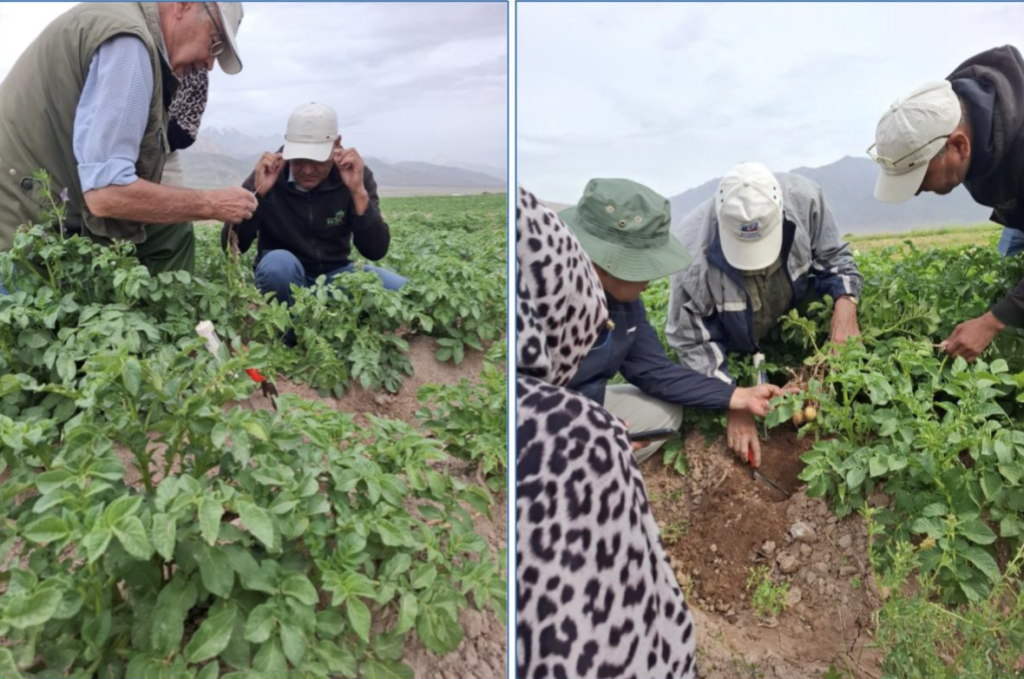
On July 13–14, 2025, a training on seed potatoes was held in the Chon-Alay district. The event was organized as part of the visit of international expert Simon Jan Schutter to Kyrgyzstan. The training was conducted under the Demonstration Cooperation Center (DCC) scheme focused on seed potatoes.

The training gathered 10 participants — farmers, project specialists, and representatives of cooperatives growing elite seed potato varieties.

On July 13, Simon Jan Schutter conducted a theoretical session, providing practical recommendations on storage, harvesting, sorting, pest protection, and disease prevention. Participants had the opportunity to ask questions related to their farms and receive useful answers.


On July 14, the training continued with a field monitoring visit to plots growing super-super elite and elite seed potato varieties. The expert, together with farmers and project specialists, inspected the fields and gave tailored agronomic advice to each farm.

Within this visit, farmers, agronomists, and inspectors received valuable knowledge and international experience on key requirements for growing seed potatoes. The materials and recommendations provided by the expert will be widely used by agronomists in further consultations and field monitoring.


On July 3, 2025, a Field Day on seed potatoes was held in the village of Acha-Kayyndy, At-Bashy district, Naryn region, with the support of the Value Chain Agro Finance project.

The event brought together representatives of the Ministry of Agriculture of the Kyrgyz Republic, local authorities, international organizations, seed farms, and farmers from different regions of the country. The program included:

  • Field demonstration of “super-super elite” and “super elite” seed potato varieties
  • Presentations of promising seed potato varieties
  • Agronomic solutions and field technologies
  • Experience sharing by leading experts from the Netherlands and Kyrgyzstan


Opening remarks were delivered by Deputy Minister of Agriculture of the Kyrgyz Republic Janibek Kerimaliev, Agricultural Advisor to the Ambassador of the Kingdom of the Netherlands Mr. Arie Veldhuizen, local government officials, and representatives of the HZPC company and the Value Chain Agro Finance project.

During the practical part of the event, participants visited the demonstration field and were divided into two groups:

  • Group 1: Demonstration of super-super elite and super elite seed potatoes (Nooruz Zarlykov, Altynbek Aiybashev)
  • Group 2: Presentation on potato varieties and agrotechnologies (Khamid Mamashukurov, Ulan Kubanychbek uulu)

The Field Day served as an important platform to promote seed sector development, exchange experiences, and strengthen agricultural cooperation.


On June 13, 2025, a Field Day was held in Kalinina village, Kara-Suu district, organized by the Kara-Suu branch of KGFRAS, the TES Center, and the State Seed Unit (GSU). The event provided an excellent opportunity for farmers, representatives of agricultural cooperatives, and local authorities to see modern approaches to growing cereals under changing climate conditions.

The focus was on new wheat varieties adapted to the southern regions of the country. Participants visited demonstration plots where seeds were grown using No-Till technology. A special highlight was a 7-hectare plot where the GSU is producing 40 tons of seed to distribute to 40 farmers—each receiving one ton to sow on a total area of 200 hectares.

Farmers were impressed by the field conditions: no weeds or varietal mixing, and the potential of the new varieties. Many asked practical questions, shared their experiences, and discussed how to apply what they saw on their own land. Local administration representatives, GSU specialists from neighboring regions, KfW experts, and agricultural consultants also attended.

The positive results of No-Till adoption were highlighted: while last year this technology was applied on 146 hectares, this year it covers over 200 hectares. Local media, including KTRK Osh TV, covered the event to promote resource-saving technologies.

Participants expressed readiness to continue cooperation with the organizers and praised the high level of event organization. The Field Day was not only a demonstration of technology but also a platform for knowledge exchange and partnership strengthening. Many suggested holding such meetings more often, especially during the growing season, to see everything live and gain practical benefits.


On June 5, a field visit was conducted to the villages of Kok-Zhar and Ala-Too by project experts and representatives from the European Union. The purpose of the visit was to familiarize themselves with the activities of the Berry Growers Association, visit local farms, and gather feedback from farmers.

The visit included participation from project experts Sherzod Abdurakhmanov and Hartwig Ungetheim, Ayzhan — coordinator from the Berry Growers Association,  Ernis — chief agronomist, as well as representatives from the European Union.

As part of the visit, the delegation first visited “KH Yrysbai,” where they observed agricultural practices directly in the field and engaged with the farmer. They then traveled to Ala-Too village to visit “KH Ysmaiyl,” an enterprise led by Zukhra Ismailova that specializes in storage, freezing, and export of berries.

The group also visited a collection point where berries are received, sorted, and packed before processing or export.

The visit provided valuable insights into the current state of the berry sector and allowed stakeholders to discuss challenges and identify opportunities for further collaboration.


From June 2 to 4, 2025, a Field Day was held as part of the ongoing project promoting soil-conserving and resource-efficient farming practices. The event took place on a farm plot in Karool village, Uzgen district, and on the Zhivprom site in the town of Kerben, Aksy district. The main goal was to promote no-till farming technology among local farmers and to showcase real examples in the field.

The project team arrived in advance to prepare the event site and set up three demonstration stations:

  1. Agrotechnology and Benefits of No-Till Farming – presented by project agronomist-consultant Atabai Toychu uulu.
  2. Plant Protection from Pests and Diseases – explained by project coordinator Bakyt Tajibaev.
  3. Economic Analysis – led by agronomist-consultant Gulmayra Mamanova, who compared traditional wheat cultivation methods with modern no-till approaches and their financial advantages.

A total of 58 participants attended the event, including farmers, local government representatives, the District Agricultural Development Office, and tractor operators from MTS.


  • From Uzgen district: 23 participants (1 woman, 2 youth)
  • From Aksy district: 35 participants (3 women, 2 youth)

Participants were registered and provided with handouts before visiting the stations in small groups. The event began with a welcome speech from the project coordinator, who expressed gratitude for the participants’ interest and outlined the project’s goals and expected outcomes.

The Field Day concluded with a Q&A session where farmers actively engaged with the presenters. The event marked an important step toward building a sustainable model for cereal production on rainfed lands.


On May 28, 2025, a seminar on “Promoting No-Till Soil Treatment Technology” was successfully held in the conference hall of the Ministry of Water Resources, Agriculture, and Processing Industry (MWRAPI) of the Kyrgyz Republic. The seminar aimed to improve soil fertility, strengthen climate resilience, and enhance food security in the country.

The seminar was organized by MWRAPI and brought together representatives from the Ministry of Economy and Commerce, Delegation of the European Union to the Kyrgyz Republic, Swiss Agency for Development and Cooperation (SDC), Embassy of Germany, KfW, FCDO, World Food Programme (WFP), World Bank, Asian Development Bank (ADB), FAO, the Association of Flour Milling Enterprises of the Kyrgyz Republic, Rural Advisory Services (RAS), microcredit agencies, banks, as well as GIZ ILUCA and GIZ GESPSD projects.

The seminar program included:

  • Welcome speeches from MWRAPI and donor organizations;
  • Presentation by MWRAPI on rain-fed agriculture, grain crop policy, and soil management;
  • Presentation of No-Till technology by Torsten Swoboda, Agricultural Production and Training Expert  of the Value Chain Agro Finance project;
  • Presentation by WFP on climate profiles, No-Till practices, and insurance schemes;
  • Discussion on cooperation between local grain producers and flour milling enterprises, with remarks from Ruslan Ryskulov, Executive Director of the Association of Flour Milling Enterprises;
  • A final discussion on prospects for scaling up no-till soil treatment technology in Kyrgyzstan.

The seminar served as an important platform for knowledge exchange and joint planning to support sustainable agricultural development.