





Growing together: Integrating farmers into value chains with sustainable finance

Growing together: Integrating farmers into value chains with sustainable finance

On February 13, 2026, the forum “The Future of Seed Production in Kyrgyzstan: Quality, Innovation, Partnership” was held in Bishkek the Ministry of Water Resources, Agriculture and Processing Industry of the Kyrgyz Republic and brought together representatives of government agencies, research institutions, international organizations, and agribusiness.

Opening remarks were delivered by Bakyt Torobaev Industry, and the representative of the Food and Agriculture Organization of the United Nations in Kyrgyzstan. They highlighted the strategic importance of developing seed production for enhancing the country’s food security and the sustainability of its agriculture.

During the first session, participants presented reports on the current state of the industry, the development of new Kyrgyz breeding varieties, seed potato cultivation, and the conservation of plant genetic resources. Additionally, A.A. Mamashukurov, an expert of the “Value Chain Agro Finance” project, delivered a presentation titled “Experience in Establishing an Internal Quality Control System for Agricultural Seeds.” He discussed practical approaches to ensuring seed quality, implementing internal control procedures, and the role of systematic seed testing in increasing agricultural competitiveness, emphasizing the importance of adopting modern quality control mechanisms in the seed production sector.
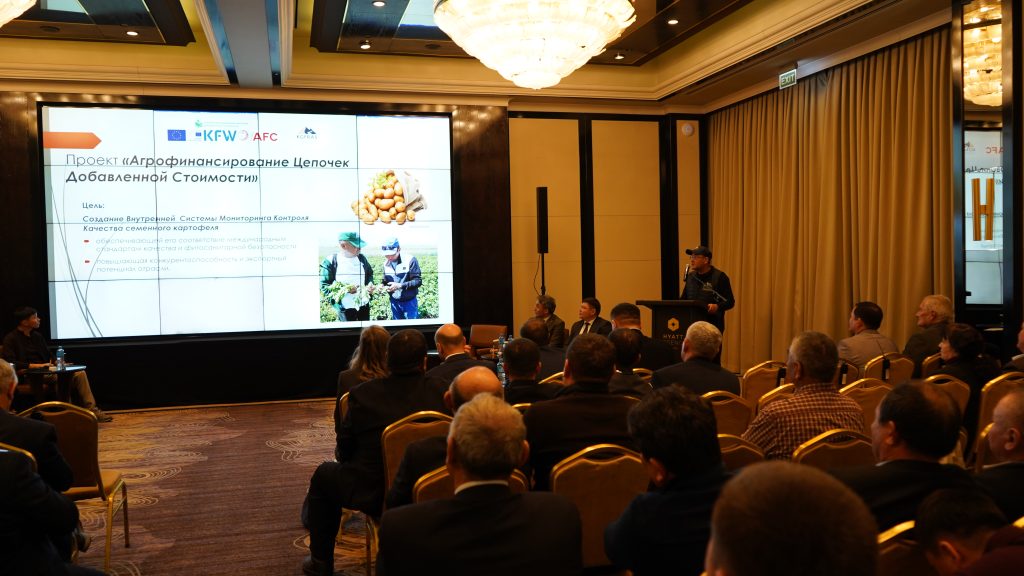
In the second session, participants discussed international experience in seed production, the development of the field crop seed industry, breeding achievements, and innovative technologies for intensive agriculture. Particular attention was paid to scaling up the production of high-quality seed material and strengthening scientific and industrial partnerships.

The forum concluded with an exchange of views on the future prospects of the sector, the adoption of a resolution with recommendations for improving state policy in seed production, and the signing of a memorandum of cooperation between the Department for the Expertise of Agricultural Crops and Horticulture, HZPC, and the AgroLead Group of Companies. The agreement aims to develop high-quality seed material, implement international standards, and strengthen partnerships in Kyrgyzstan’s agricultural sector.

The forum provided an important platform for dialogue among government, science, and business, confirming the growing interest in modernizing the country’s seed production industry.


From December 8 to 13, 2025, a practical training course was held at the laboratory of the Center for Veterinary Diagnostics and Expertise within the framework of the Value Chain Agro Finance project.

The training aimed to support the implementation and expansion of the laboratory’s scope of accreditation as well as to strengthen practical skills in determining residual quantities of veterinary medicinal products in food of animal origin.

During this period, the main focus was on the preparation and proper documentation of validation materials based on previously conducted practical trainings. This work represents an important step toward improving the quality of laboratory testing and ensuring compliance with international standards.

Begimay Imbraimakunova, Leading Specialist, noted: “This practical course helped us gain a deeper understanding of validation documentation requirements and systematize our existing knowledge. It directly contributes to the laboratory’s readiness to expand its scope of accreditation.”

Elzat Shambetova, Physicist Engineer, added: “Throughout the course, we thoroughly reviewed the materials from previous trainings and prepared the documentation in line with established requirements. This training format allows us to effectively apply all stages of validation in our daily laboratory work.”


On October 13–14, a field visit was conducted to the Jalal-Abad region, Bazar-Korgon district, in the villages of Arstanbap-Ata and Jai-Terek. During the visit, meetings were held with farmers to assess their satisfaction with the project’s activities, the results of the current season, and their goals for the upcoming year.

According to the survey results, all farmers expressed satisfaction with the quality of the introduced seed material as well as with the consultations and services provided by project.

In the current season, SCS Jalal-Abad supplied each farmer with 100 kg of Paradizo variety seeds (Elite reproduction) and provided production inputs such as fertilizers and pesticides. On average, farmers harvested about 1 ton from 3 ares (a multiplication factor of 1:10). Farmers noted that the Paradizo variety proved to be more resistant to diseases and pests compared to other varieties.


Farmers also shared the following suggestions for the next season:

  • increase the quantity of distributed seeds to 200 kg per farmer;
  • improve access to agricultural inputs, particularly in Jai-Terek, where there are no agro-shops;
  • explore the possibility of introducing Islamic financing options.

Some issues were also identified during the visit. Despite the overall positive atmosphere, it became clear that not all farmers fully understand the concept of seed production. It was expected that they would continue working with the produced seed potatoes up to the second reproduction, but some have already started selling them without the required documentation and certification. Another concern raised was the absence of a seed inspection system.

Overall, the visit highlighted farmers’ motivation to continue collaboration and further develop seed production in the region.


From October 19 to 25, 2025, GOPA AFC GmbH, within the framework of the “Value Chain Agro Finance” project aimed at increasing agricultural productivity, improving product quality, and promoting sustainable production practices, organized a study tour to Latvia.

The event took place at the Institute of Food Safety, Animal Health and Environment “BIOR” — the National Reference Laboratory of Latvia, recognized as a leading center of expertise in analytical research and risk assessment.

The training was attended by representatives of government laboratories of the Kyrgyz Republic, including:

  • the Center for Veterinary Diagnostics and Expertise,

  • the Bishkek Center for Testing, Certification, and Metrology, and

  • the Department of Disease Prevention and State Sanitary and Epidemiological Supervision.


The program focused on enhancing the professional qualifications of specialists and familiarizing them with the practical application of analytical methods for detecting contaminants and residues, as well as with food certification procedures in accordance with European Union requirements.

Over the course of five days, participants completed an intensive training program led by BIOR’s leading experts — Prof. Aivars Bērziņš, Prof. Vadims Bartkevičs, and laboratory specialists Iveta Pugajeva, Anna Skrastiņa, Romans Pavļenko, and others.

The training covered the following key topics:

  • current EU practices in the analysis of pesticides, mycotoxins, and veterinary drugs;

  • methods of quality control and validation of laboratory analyses;

  • procedures for food certification and food supplement labeling assessment in accordance with Regulation (EU) No 1169/2011;

  • the latest BIOR research on honey quality and authenticity assessment.

Particular attention was given to traceability, food safety, and EU standards, which are key focus areas for Kyrgyz laboratories within the process of integration into international quality control systems.

The organization of such study programs contributes to strengthening the capacity of national laboratories, fostering professional networking, and promoting knowledge exchange with leading European research institutions.


On October 10, 2025, a field visit was conducted in Nizhny Chuy village, Chuy region, as part of the monitoring activities of the agricultural scheme on sweet pepper cultivation.

During the visit, the experts met with farmers participating in the project and conducted surveys to assess their satisfaction with the project’s activities, the results of the current season, and their plans for the next year.

Farmers reported a successful harvest and expressed their gratitude to the project and its partners for providing valuable consultations, quality seeds, and fertilizers. This season, TES Center, through its microfinance organization, supplied farmers with seeds and fertilizers. The most common varieties cultivated were the Moldovan types “Polet” and “Lidia”, as well as the hybrid varieties “McGretta” and “Bugatti.” Farmers also showed a preference for the local variety “Galoshi.”

The average yield in the region reached 30 tons per hectare, which is considered satisfactory. With a market price of 50 KGS per kilogram, farmers can easily cover production costs and generate an average profit of about 1 million KGS per hectare.

Compared to the previous season, when pest infestations (notably the cotton bollworm) were a major issue, this year farmers successfully applied effective pest control methods, resulting in significantly fewer problems.

12
Orientation: 1
« of 5 »

However, several challenges were identified during the visit:

  • Lack of crop rotation: Most farmers do not follow crop rotation practices, which may negatively affect soil fertility and future yields.

  • Harvest losses: Around 2–3 tons per hectare of produce were left unharvested due to various reasons, causing losses equivalent to approximately USD 1,000 per hectare.

  • Market preferences: Despite the availability of hybrid and imported varieties, local varieties remain in higher demand. TES Center is therefore recommended to conduct an additional economic analysis to assess the profitability of different varieties and hybrids.

The findings of the field visit will help the project and TES Center to refine their future support measures and further enhance the efficiency of agricultural schemes in the region.


On October 8–9, 2025, project experts, together with partners Agrolid and KGFRAS, conducted field monitoring of the seed potato agricultural scheme in the At-Bashy district of Naryn Region.

The visit aimed to calculate the seed potato multiplication factor and assess farmers’ satisfaction with the past agricultural season.

During the visit, experts met with leaders of farmer groups and the seed inspector. KGFRAS staff carried out calculations to determine the average weight of seed material by counting the number of tubers in 50 kg and collected samples for laboratory analysis to identify pests and diseases.

According to the survey, farmers were generally satisfied with the season’s outcomes. The average yield reached approximately 30 tons per hectare, and the quality of the harvested product was deemed satisfactory. The collected harvest was transported to the Kochkor district for further storage.

Some challenges were also identified, including the lack of clear seasonal records (phenological journals) and concerns regarding the quality of imported HZPC seed potatoes, specifically germination rates and large tuber fractions.

The field monitoring provided project experts with up-to-date data on the implementation of the scheme and helped identify areas for improving seed potato production practices.


On September 10, 2025, the TES Center, in partnership with KWS and the processing plant “Koshoi”, organized a Field Day in the village of Natsionalnoe, Sokuluk district. The event was held within the framework of the “Value Chain Agro Finance”: Sugar Beet  project and brought together 55 participants — beneficiary farmers from Jayyl, Moskovsky, and Sokuluk districts, as well as interested farmers from other areas of Chui region.

The main goal of the event was to present the results of implementing the innovative CONVISO SMART technology in Kyrgyzstan. The Field Day was moderated by the project’s chief agronomist, Mirgasym Allahveranov.

Key sessions of the Field Day

  • Presentation of KWS hybrids. KWS expert Mirlan Akmatov introduced promising SMART sugar beet hybrids grown on the demonstration plot and highlighted their characteristics.

  • Agrotechnology of sugar beet cultivation. Chief agronomist Allahveranov M. discussed the advantages of the CONVISO SMART system compared to traditional cultivation methods, emphasizing proper soil preparation, timely sowing, and effective crop protection.

  • Weed control solutions. Special guest from Russia, KWS expert Sergey Iosifov, provided detailed information on the use of CONVISO herbicide, including dosage schemes and application timing. He stressed the system’s strong performance against difficult weeds such as Chenopodium album and dodder, which are poorly controlled by traditional herbicides.

  • Practical recommendations. TES Center specialists shared advice on preventing and managing soil crust, which became a serious challenge for farmers during the 2025 season due to changing weather conditions.

  • Dialogue with processor. General Director of OJSC “Koshoi,” Alexander Barbalat, spoke about the plant’s future plans, challenges with sugar content levels, acceptance conditions, and current procurement prices.

Results

Farmers highly valued the effectiveness of the CONVISO SMART system and its long-term economic benefits. They were particularly impressed by the absence of dodder on the demonstration field — a weed that usually causes major problems after irrigation.

Farmers from Jayyl district proposed establishing a demonstration field with CONVISO® SMART technology in 2026 to further share experience with local growers. The TES Center welcomed this initiative and expressed readiness for joint work in the upcoming season.

At the end of the Field Day, participants received methodological recommendations for managing soil crust as well as informational brochures from KWS.


On August 1, 2025, a Field Day on the topic “Demonstration of Hybrid and Variety Cultivation Technologies of Sweet Pepper” was held at the demonstration plot of farmer Ravshan Jooshev in Nizhnee Chuyskoye village, Sokuluk district, Chui region.

The event was organized within the Sweet Pepper CDC under the coordination of Ainagul Nasyrova and brought together 50 participants. It was attended by specialists from the district Department of Agricultural Development, experts from the bio-factory of the Department of Chemicalization, Quarantine and Plant Protection of the Ministry of Agriculture of the Kyrgyz Republic, as well as representatives of companies “Agrovito,” “Agrimatka,” and others.

Welcome speeches were delivered by Maksat Kozhomkulov, Director of the Bishkek branch of the TES Center; Akata Bayaliev, representative of the Sokuluk Department of Agricultural Development; and Elvira Suvanova, representative of the AFC project, who emphasized the importance of supporting farmers through the Value Chain Agro Finance project.

Abdilkhamid Mamashukurov, agronomist-expert of the TES Center, presented innovations in sweet pepper cultivation — from plant nutrition and protection systems to changes in sowing methods, transplanting, and fertilizer application. Farmers also learned about methods of controlling the winter cutworm pest.

The practical session included a demonstration of pepper samples. Based on fruit weighing, the PALET+ hybrid (493 g) received the highest score, showing strong yield performance, fruit firmness, and suitability for export.

In the economic block, participants reviewed a comparative profitability analysis of various hybrids. Specialists from the Department of Organic Agriculture presented solutions for biological plant protection, including entomophages and bio-fungicides, while seed and fertilizer supplier companies showcased their product lines.

Discussions highlighted the integrated plant protection system combining biological and chemical methods, as well as issues of variety selection, optimal planting schemes, and irrigation practices.

This Field Day was conducted within the framework of the Value Chain Agro Finance project. The project is implemented by the German consulting company GOPA AFC in consortium with the local partner GOPA-CAICo, with the support and active participation of the Ministry of Finance and the Ministry of Water Resources, Agriculture and Processing Industry of the Kyrgyz Republic.


On July 29, 2025, a field day of the Value Chain Agro Finance project was held in Zhar-Bashy village, Chon-Alai district, with the participation of 56 stakeholders. Among them were representatives of the District Administration, the Plenipotentiary Office, the State Seed Inspectorate, local self-governments, international and partner organizations, members of the “Zhar-Bashy” cooperative, and invited guests from Uzbekistan.

The theme of the event was “Implementation and Development of Elite Seed Potato Production in the High-Mountain Conditions of Chon-Alai District.” Participants learned about the introduction of elite seed potato categories (S, SE, E), agro-technological features of high-altitude cultivation, the organization of a private quality control system, as well as demonstration plot results and future plans for scaling production and sales.

The field day was organized at three stations:

  • Presentation of the “Zhar-Bashy” Cooperative – its goals, potential, and seed production development plans.

  • Seed Varieties and Private Voluntary Quality Control System – certification stages and seed potato requirements.

  • Demonstration of Agricultural Equipment and Machinery used for cultivation and processing.

The visit of guests from Uzbekistan was a highlight of the event. They inspected the super-super elite potato fields, highly appreciated their quality, and expressed readiness to purchase seed potatoes in the future, specifying varieties of interest.

Interested buyers from Tajikistan were unable to attend due to technical reasons, but confirmed their interest in cooperation. They received supporting documents, including seed characteristics, certificates of authenticity, approval acts, and soil analysis results.

Traditionally, a joint meeting of three cooperatives is held after the field day: “Zhar-Bashy” (producer), “Aravan AgroService” and “Altyn Oroon” (buyers). This year, by mutual agreement, the meeting was postponed closer to the harvest season to set a more accurate price for potatoes.


From July 18 to 20, specialists of our project, together with experts from the TES Center’s “Seed Potato DTC” project, conducted monitoring of 28 fields located in various areas of Chon-Alai and Chuy regions. A total of 18 cooperative members took part in the activity.

In total, 28 fields were inspected, with 18 cooperative members participating in the following areas: Zhar-Bashy (gardens), Batuchiy, Zhal, Chapkyn-Tiybes, Plot 76, Chech-Tobo, Ken-Koktu, Kydyrsha-Aryk, Bakhmur, and Kok-Zhar.

During the visits, experts assessed plant growth, identified pests and diseases, and discussed farming practices with the participants. Results showed an average germination rate of 90–95%, with plants in the budding and flowering stage. Overall, the condition of the fields was rated as good.

However, some challenges were noted. On several fields, irrigation furrows were too long, and water accumulated at the lower ends of plots, which may damage soil structure. Farmers were advised to divide furrows and clean drainage channels. A positive example was the use of polyethylene irrigation pipes by several farmers — a new technology for the area that significantly improves water distribution and prevents soil erosion.

The monitoring also revealed the presence of pests such as Colorado potato beetles and cutworm caterpillars. Farmers have already begun using drones for pest control, with good results. In addition, water traps were installed to track aphids and help prevent the spread of viral diseases.

Testing of the herbicide “Lontrel” against thistle showed limited effectiveness and some negative effects on potato plants. Work will continue to identify alternative solutions.

In conclusion, the fields are in good condition with no major phytosanitary risks. Farmers received practical recommendations on irrigation, crop care, and pest control — steps that will further improve the quality of seed potato production.